CAFAMORE explores how to bridge finance streams for the agricultural transition
This year’s European Carbon Farming Summit set record numbers, with more than 700 participants on site. Among them, 35 CAFAMORE partners were present in Italy, with direct involvement in nine sessions covering topics such as MRV systems, policies and supporting mechanisms, market trends, and the development of a carbon registry, among others.
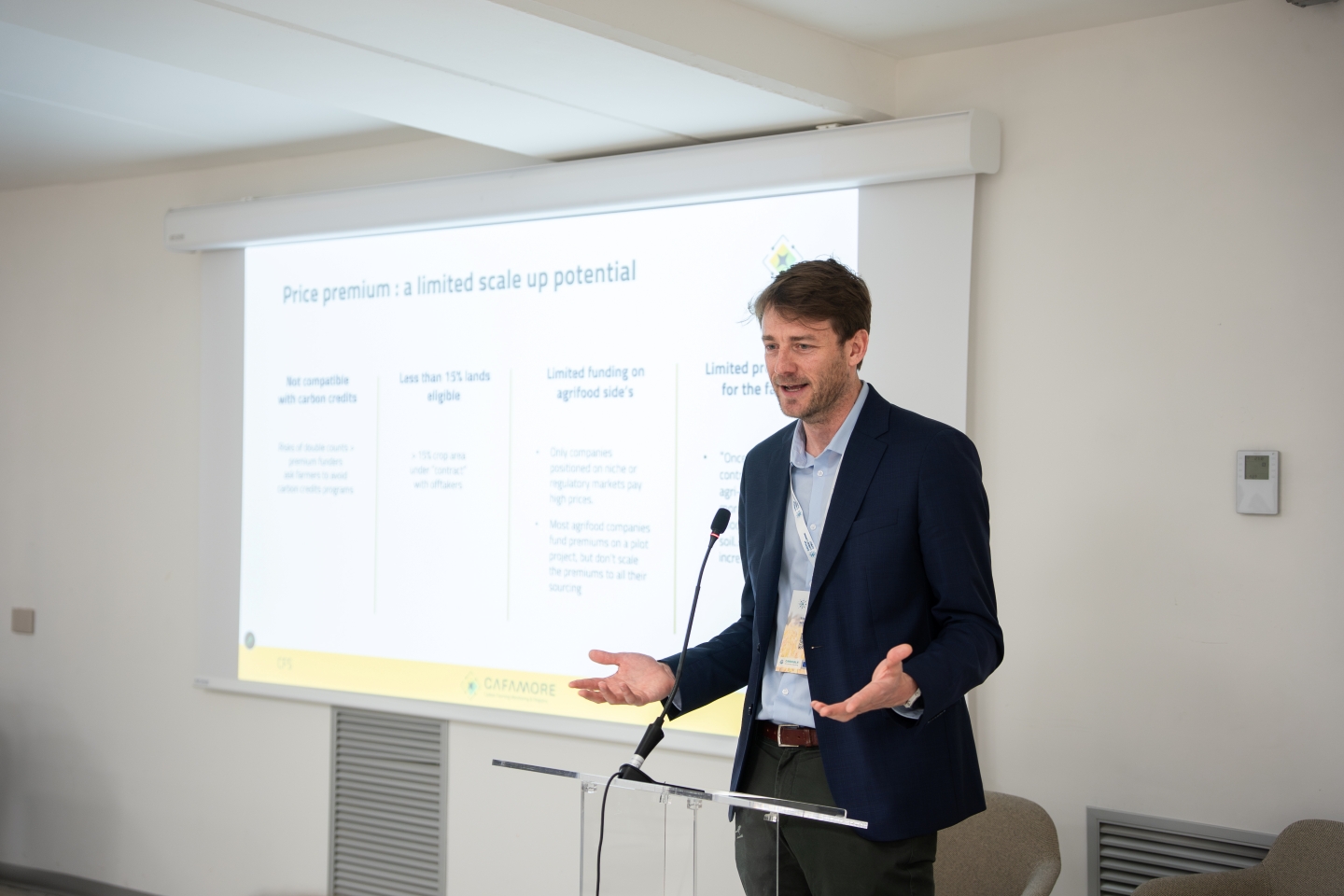
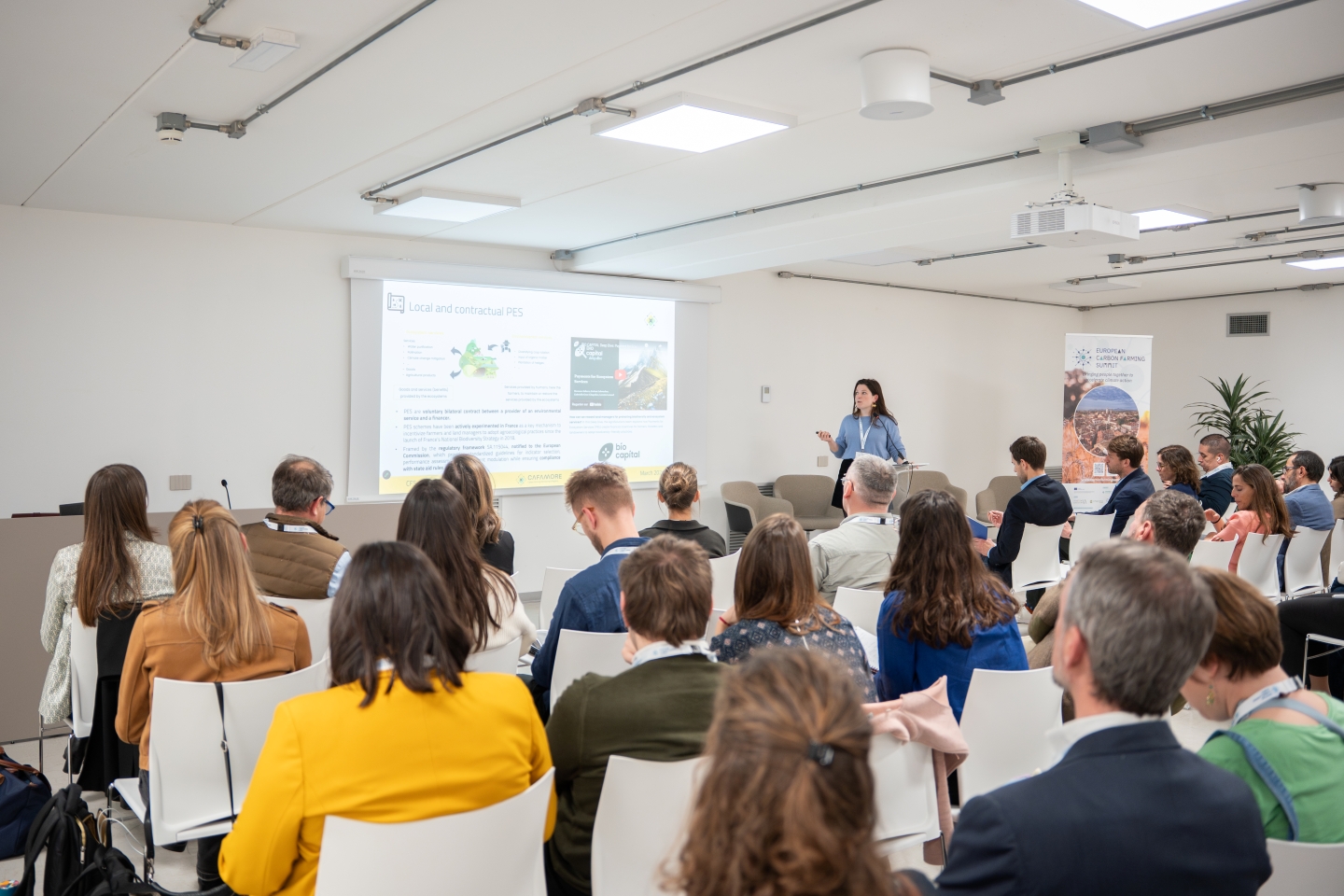
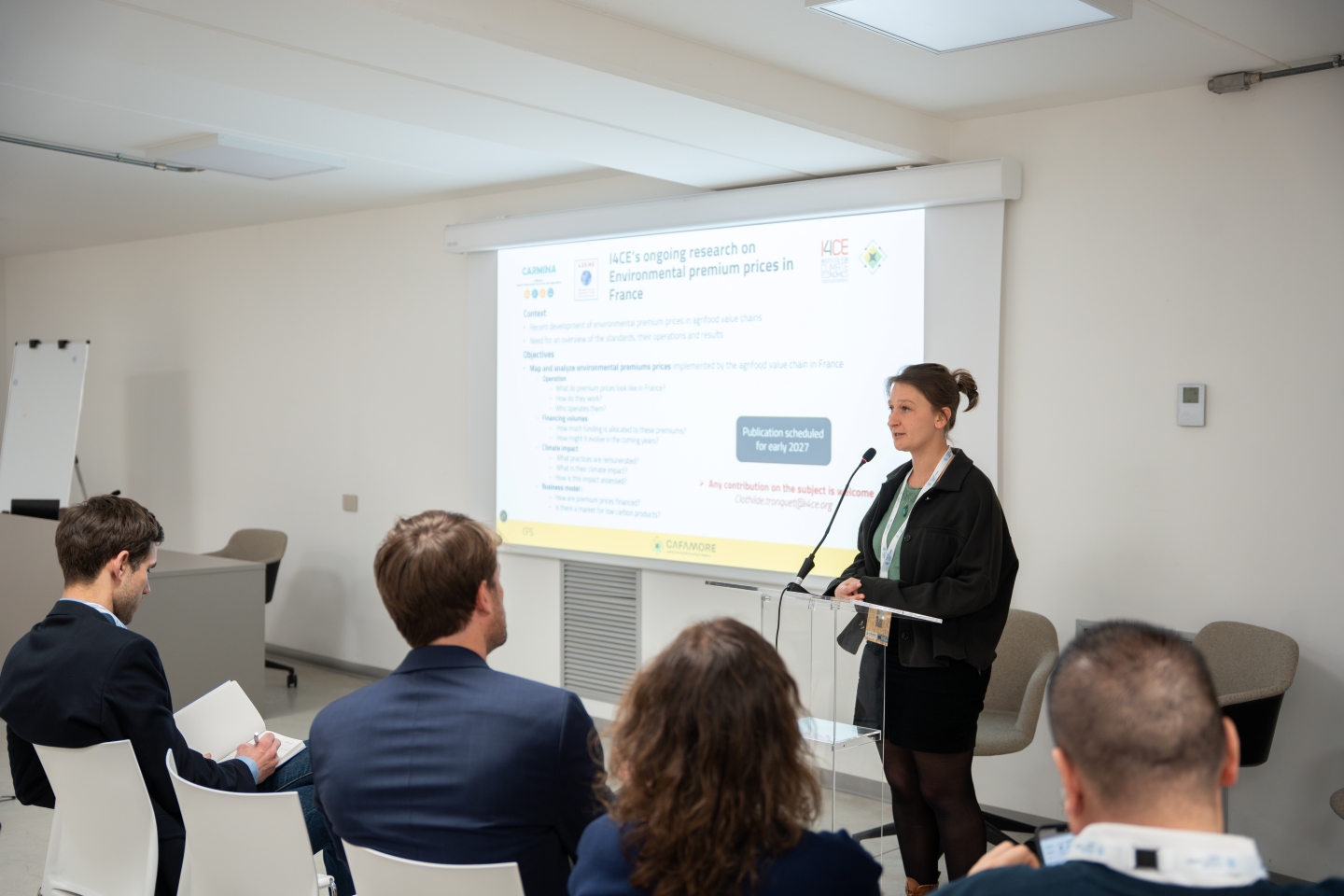
One of these sessions, organised by CAFAMORE partners Romane Jubera (Agrosolutions), Edouard Lanckriet (Agrosolutions), Aaron Scheid (Ecologic Institute) and Clothilde Tronquet (I4CE), aimed to explore how diverse financial mechanisms—public subsidies, voluntary carbon markets, value-chain premiums, contractual payment for ecosystem services, and emerging nature credits—can support farmers’ transition towards low-carbon and biodiversity-friendly agriculture.
One of the central debates during the session revolved around co-claiming, which consists in the overlapping of diverse carbon and biodiversity claims in and outside the value chains. In this context, agri-food industries especially fear losing the right to claim emission reductions or carbon removals achieved within their value chain if these are certified as credits and sold to a third party. The legitimacy of multiple claims was discussed with the audience as well as the need for simplified and harmonised accounting frameworks. Challenges also included the scalability of biodiversity monitoring, the heterogeneity of MRV (Monitoring, Reporting, and Verification) systems, and questioning the sufficient demand for carbon or biodiversity credits to pay for the transaction cost and the additional public good provided by the action.
The session, which can be revisited here, brought some clear consensus points, such as the need for a coherent mix of financial tools, as no single mechanism can finance the entire agricultural transition. In addition, and as the whole Summit has underlined, carbon farming must go beyond carbon counting, moving away from rewarding isolated practices and towards systemic, resilient farming approaches. Moreover, combining carbon and biodiversity metrics is essential to meet value-chain demands for regenerative agriculture, with environmental integrity and simplicity for farmers guiding the design of financing schemes.
The main outcomes of this and all other Summit sessions, as well as the recommendations emerging from them, have recently been made public by Project Credible, and can be downloaded here. You can also follow this link to learn more about CAFAMORE’s session on building a fair, farmer-empowered carbon registry for Europe, co-organised with the OGCR project.