CAFAMORE moves forward towards a robust and credible registry for CRCF certificates
The Carbon Removals and Carbon Farming (CRCF) regulation aims to improve the carbon farming market with harmonised methodologies, the integration of minimum sustainability requirements, and a central Union Registry to prevent double issuance and counting of certificates. The design of a spatially explicit land-parcel registry is precisely one of the cornerstones of CAFAMORE, which aims to enable certification schemes to issue, manage, and trade carbon farming certificates securely.
In this context, Rob Lokers (Wageningen Research) is leading a team of CAFAMORE experts that are now setting up the functional and technical requirements and developing the design of a CRCF compliant central Union registry, a marketplace and the required interfacing with current carbon farming community systems and processes to ensure transparency and trust. The team started its work by discussing with several stakeholders linked to already functioning registries, aiming to understand different approaches towards certification and generation and handling of credits, as well as with representatives from DG CLIMA and the Open Geospatial Carbon Registry (OGCR) project to share perspectives and create synergies.
Moreover, CAFAMORE has set up a working group to explicitly address this topic, where insights from experts, technology providers, and stakeholders can directly inform the design and implementation of the registry. This Working Group, led by Edouard Lanckriet and Roxane Photinodellis (Agrosolutions), will also closely connect with the CAFAMORE pilots, which are testing the project’s MRV tools in seven different countries.
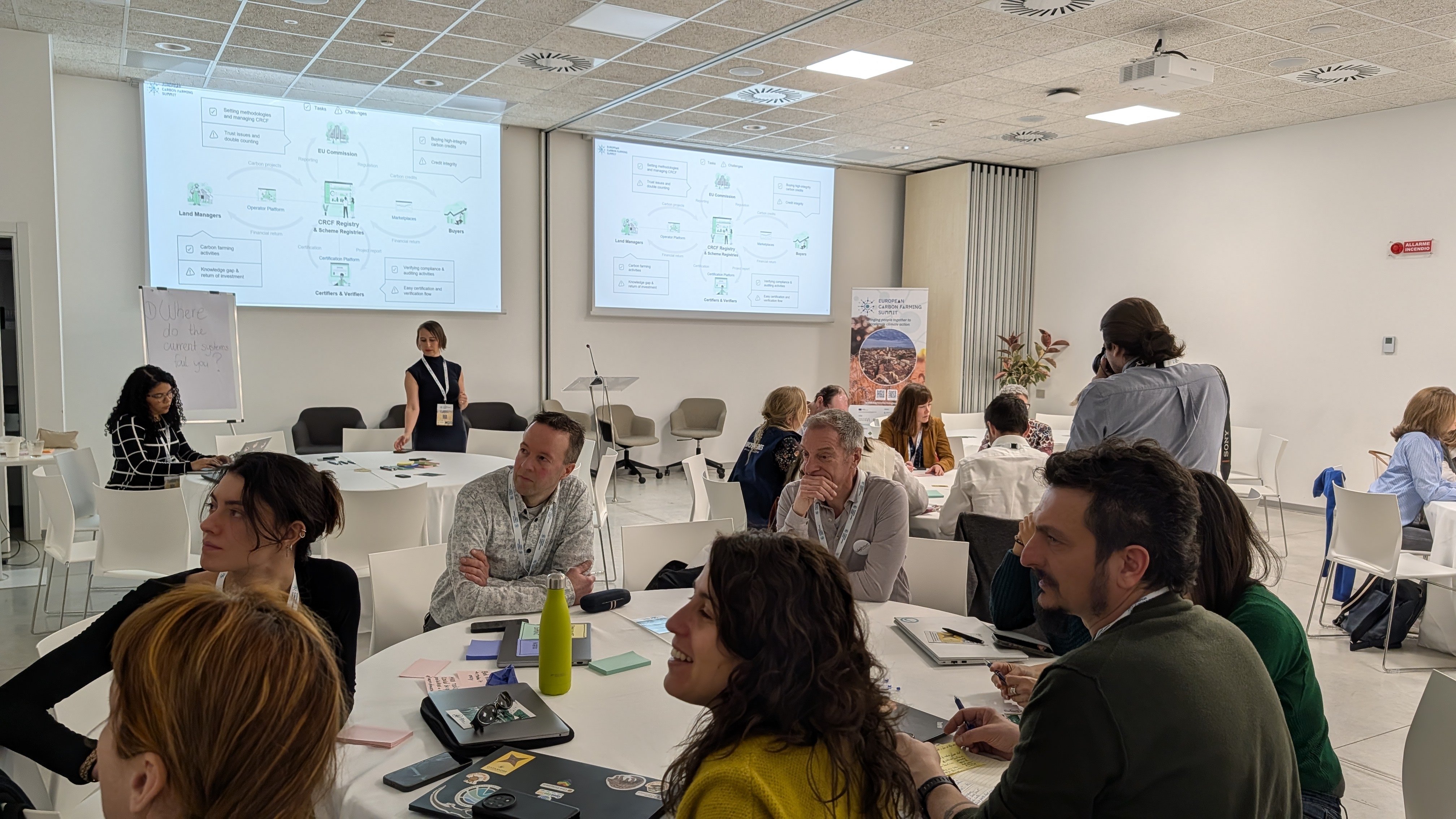
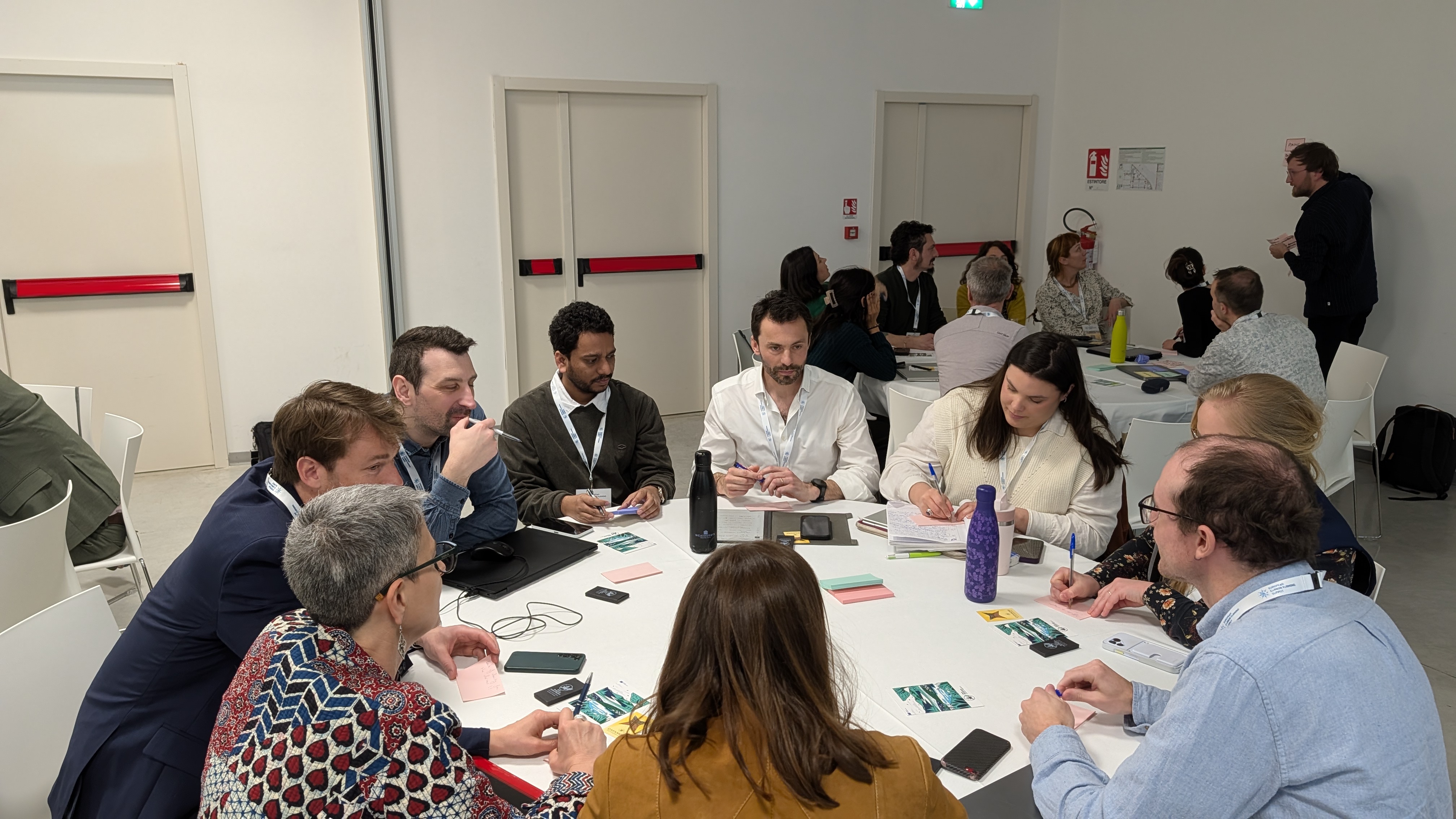
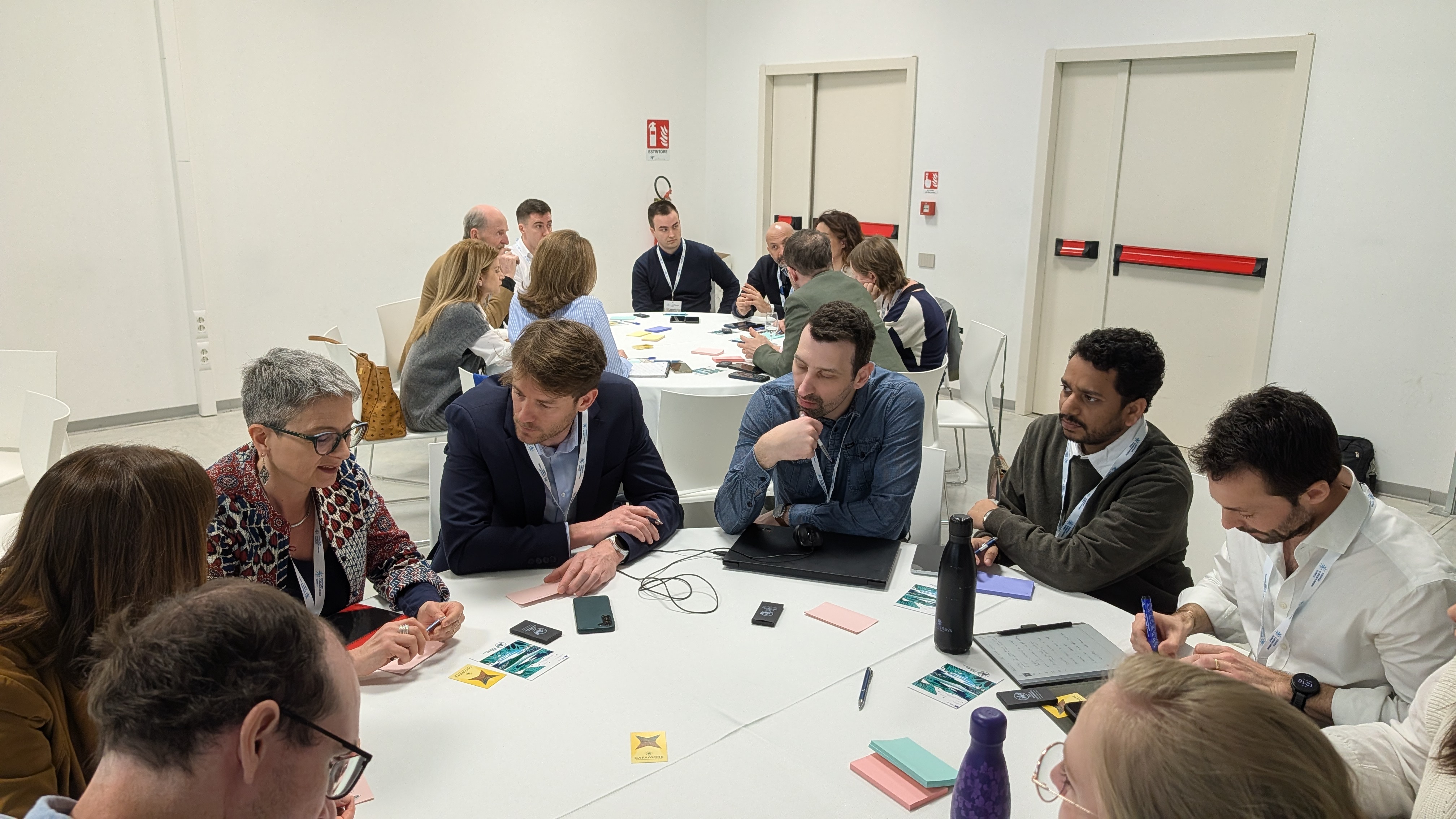
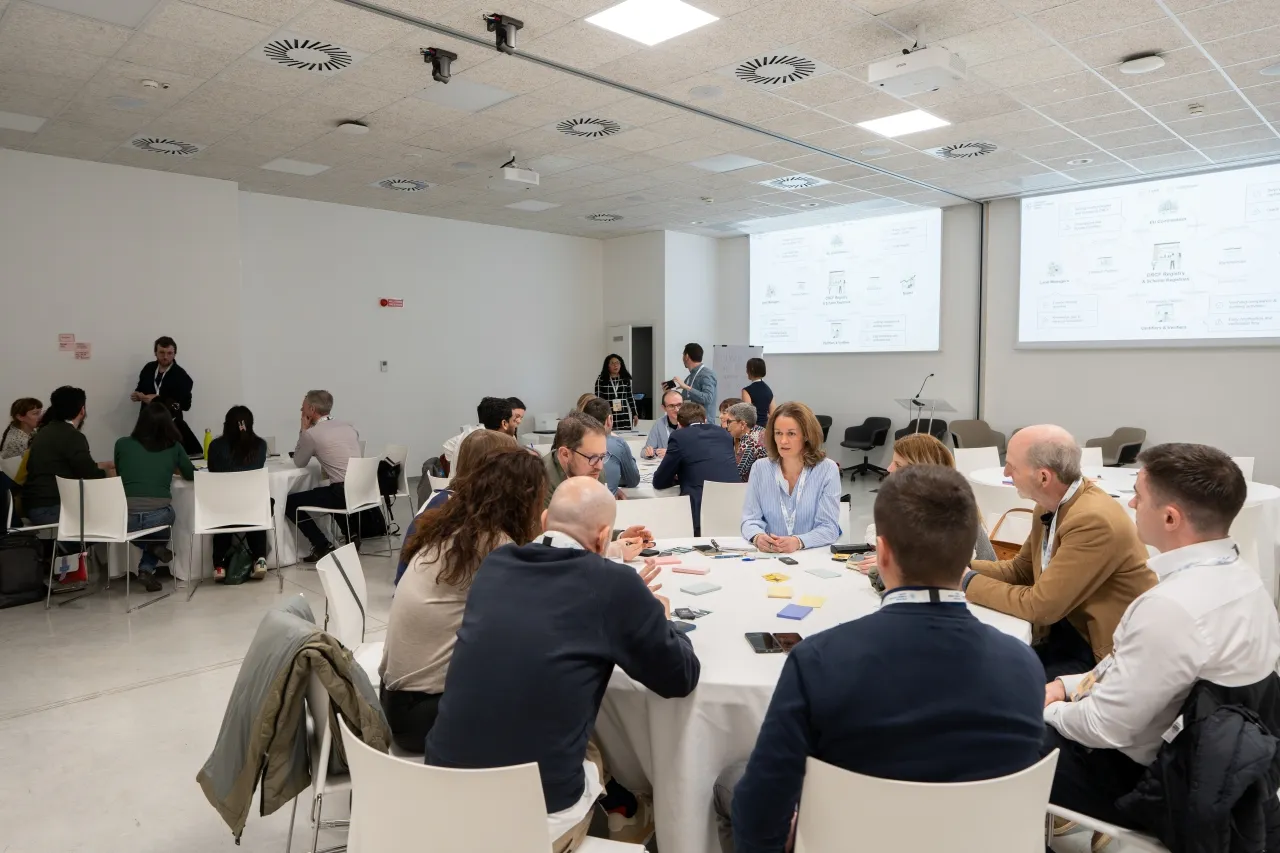
One of the key milestones in CAFAMORE’s registry design was the workshop recently co-organised with OGCR at the European Carbon Farming Summit last March in Padova. The session, titled “From Pilots to Practice - building a Fair, Farmer-Empowered Carbon Registry for Europe”, aimed to explore how farmer-empowered MRV and registry design can enable CRCF-aligned, credible markets. The workshop gathered a group of approximately 40 stakeholders, ranging from policymakers and researchers to commercial operators, farmers’ associations, verifiers and buyers.
The discussions in Italy mainly revolved around the barriers to scaling carbon farming and defining what a trustworthy European registry should look like. One of the key consensus areas was the need of placing farmers at the centre of the design, instead of just treating them as data sources, as well as promoting collaboration across the whole value chain. From the technical side, conversations highlighted the need to align carbon registries and CAP payment systems to eliminate double data entry for farmers, as well as a public interface that aggregates certified carbon removal units with full provenance and audit trails.
Moreover, it was clear from the discussions that a new registry infrastructure will only be adopted if it connects to the systems farmers and scheme operators already use, enabling interoperability between carbon farming registries and existing agricultural data infrastructure. The economic aspect was also central to the conversation, as financial risks are a critical barrier for farmer participation.
After this insightful session, CAFAMORE’s work will continue towards the development of a spatially explicit registry and a robust marketplace that support the implementation of the CRCF Regulation in Europe. Overall, the multi-actor discussion prompted by this workshop was a unique opportunity to understand the real needs, pain points, and success factors as perceived by different sectors of the carbon farming ecosystem. You can find a detailed analysis and the emerging recommendations from this (and other) sessions in the document recently published by Project Credible here.